 Going to trial requires planning and attention to detail. Jurors may not see the details of your plan, but they will appreciate attorneys who move quickly in trial and show respect for the jurors’ valuable time and attention.
Good pre-trial planning should include preparing trial exhibits for display and use in trial with consistent format, naming and labeling conventions. In trial, I want digital copies of the exhibits on my trial laptop that I can easily search, share, display and use to incorporate exhibits into outlines for opening, closing and witness examinations. In this post, I’ll share my tips for digitally organizing trial exhibits.
 Morgan and I are hosting webinars on Wednesday, March 5, and Thursday, March 6, that we hope attorneys will find helpful for everyday practice and for trial.
 A central case database where litigators track issues, witnesses, events, documents, to-do items and more is a vital tool for making e-discovery and litigation more efficient.
 I recently discovered another way to easily set up your iPad for wireless presentation display. I’ve written before about
 Litigation would be much easier if you could work on just one case at a time, and if each case moved quickly to a conclusion. Unfortunately, litigators don’t have that luxury. Litigators need to jump from case to case, putting out fires in one, then jumping to the next. Because litigation can span years, litigators often need to return to information and analysis done weeks, months or even years ago.
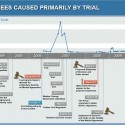
 For those of you who rely heavily on trial technicians and courtroom technology, a 2013 case on CCP Section 1033.5 is important to know about because it enhances your ability to recover trial tech costs.
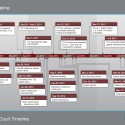 As former trial attorneys here at Cogent Legal, we know the value of good trial graphics. Our clients appreciate and understand the need for high-quality in-court presentation too.
 On Tuesday, October 1, 2023 at noon Pacific Time, I will present a webinar for SFTLA entitled “Sipping From the Fire Hose: Techniques for Managing E-Discovery and Evidence in Litigation.” If you are reading this post before that time, and you’d like to attend the webinar, please click
 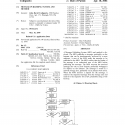 As lawyers, we are always arguing about documents, and we often need to display those documents in court. In patent cases, displaying documents is particularly important because the patent’s language describes the invention. In today’s post, I’ll talk about how to display this language in an understandable, readable and trustworthy form for the judge or jury.




Follow Cogent Legal
Subscribe by Email